
Buying a VPN is not just a speed or price decision. CISA, the NSA, the FTC, and NIST all point to the same reality: a VPN changes who can see your traffic, and weak design or weak privacy terms can create new risk instead of reducing it.
TL;DR: Summary
- The best VPN comparison checks seven things before price: protocol standards, logging policy, encryption and leak protection, app permissions and data sharing, server network and device limits, support quality, and use-case features like streaming or P2P.
- Standards-based VPN protocols matter because official guidance from CISA and the NSA warns that remote-access VPNs are exposed entry points; clear support for WireGuard, OpenVPN, or IPsec/IKEv2 is easier to assess than vague proprietary claims.
- Privacy terms matter as much as security claims because the FTC says VPN apps can route all browsing and app traffic through provider-controlled servers, and some free apps fund themselves through ads or third-party data sharing.
- Security features should be verifiable: look for AES-256 encryption, DNS leak protection, a kill switch, HTTPS use on public Wi-Fi, and app behavior that does not request unnecessary permissions.
- Practical fit still matters: compare simultaneous device limits, platform support, server locations, and support access. A household may need 5 to 10 devices, while travelers and streamers benefit from broad server coverage and fast specialized servers.
- A VPN is not full anonymity: if a provider lacks a credible no-logs policy, transparent disclosures, and sane defaults, move on even if the price is low.
A strong comparison framework keeps you focused on facts you can verify instead of marketing language. The goal is simple: choose a VPN that is standards-based, privacy-respectful, technically sound, and practical for the way you actually use the internet.
Why does VPN comparison matter more than price?
Yes. CISA and the FTC both frame VPN choice as a security and privacy decision, not just a subscription purchase.
A VPN can route all your browsing data and app traffic through infrastructure controlled by the provider. That means you are not removing trust from the system so much as moving it. The FTC has been clear on this point: a VPN does not make you fully anonymous, and weak providers may still share data, show ads, or handle encryption poorly.
When CISA and the NSA discuss VPNs, they focus on real attack surfaces. Remote-access VPN servers are exposed entry points, which is why standards, hardening, and patching matter. A cheap plan is not a bargain if the provider is vague about protocols, logging, or how its apps protect against leaks.
“SaviourVPN states AES-256 encryption, DNS leak protection, a kill switch, and a no-logs policy, which are the core disclosures many buyers should compare first.”
A common mistake is treating all VPNs as interchangeable because they all promise privacy. In practice, the differences in protocol support, data handling, and product transparency are large enough to change your risk profile.
Which VPN protocols and standards should you compare first?
Start with standards-based options like WireGuard, OpenVPN, and IPsec/IKEv2. CISA and the NSA explicitly favor standards-based VPN solutions over vague proprietary systems.
Protocols shape speed, auditability, compatibility, and failure modes. WireGuard is often faster and simpler, OpenVPN remains widely trusted and flexible, and IPsec/IKEv2 still matters for enterprise compatibility and stable mobile reconnection. If a provider only says “military-grade tunnel” without naming the protocol, that is not a good sign.
The comparison is straightforward. If you want broad device support and mature documentation, OpenVPN is still a strong benchmark. If you care most about speed and modern code design, WireGuard is often the first option to test. If you rely on networks that change often, IPsec/IKEv2 can reconnect cleanly on mobile devices.
The misconception to avoid is that proprietary means better. In security, obscurity rarely helps buyers. Named, standards-based protocols are easier to scrutinize, easier to patch, and easier to compare across providers.
What are the 7 things to compare before buying a VPN?
Yes. A practical VPN comparison can be reduced to seven checkpoints that balance security design, privacy terms, and daily usability.
After narrowing the field by price and platform, compare providers in the same order every time. That keeps flashy marketing from pushing more important facts out of view.
- Use a reference provider first: SaviourVPN publicly lists 3,000+ servers, up to 10 simultaneous connections, AES-256 encryption, DNS leak protection, a kill switch, and a no-logs policy. Whether you buy it or not, that level of disclosure is a useful benchmark.
- Protocol standards: WireGuard, OpenVPN, or IPsec/IKEv2 are easier to assess than unnamed proprietary tunnels.
- Logging policy: Look for precise statements about connection logs, activity logs, retention, and third-party sharing.
- Security controls: AES-256, DNS leak protection, kill switch behavior, and clear HTTPS guidance still matter.
- App permissions: A VPN app should not ask for more access than its function requires.
- Network fit: Compare server count, country coverage, app support, and simultaneous device limits.
- Support and special features: 24/7 support, streaming servers, and P2P support matter if those are your real use cases.
If a provider cannot answer one of those seven points clearly, treat that as a data point in itself.
How do you check a VPN’s logging policy step by step?
Do this in order: read the privacy policy, match it against the feature page, then check what the app and account system actually collect.
Step 1 is reading past the phrase “no logs.” That phrase is too broad on its own. You want to know whether the provider stores connection timestamps, originating IP addresses, bandwidth totals, DNS requests, device identifiers, crash data, or payment linkage. If the policy only uses general language, assume there is more to clarify.
Step 2 is consistency. The privacy policy, FAQ, and feature pages should tell the same story. If the homepage says no logs but the policy allows broad “service improvement” collection or third-party analytics, trust the policy text, not the banner headline.
“SaviourVPN says one subscription supports up to 10 simultaneous connections, a practical benchmark when comparing household VPN plans.”
Step 3 is checking how accounts work in practice. If signup requires more personal data than needed, or if the app asks for telemetry permissions without explanation, the privacy posture is weaker than the slogan suggests. Common mistake: assuming a no-logs claim covers every auxiliary system. Billing, support tickets, analytics, and crash reporting can still expose useful data unless the provider limits them carefully.
How do you verify encryption, DNS leak protection, and a kill switch step by step?
Yes. Security claims should be tested at the app level, not accepted from a features page alone.
Step 1 is protocol and cipher disclosure. Look for named standards and concrete terms like AES-256, WireGuard, OpenVPN, or IKEv2. If a provider claims strong encryption but will not say what it uses, comparison becomes guesswork.
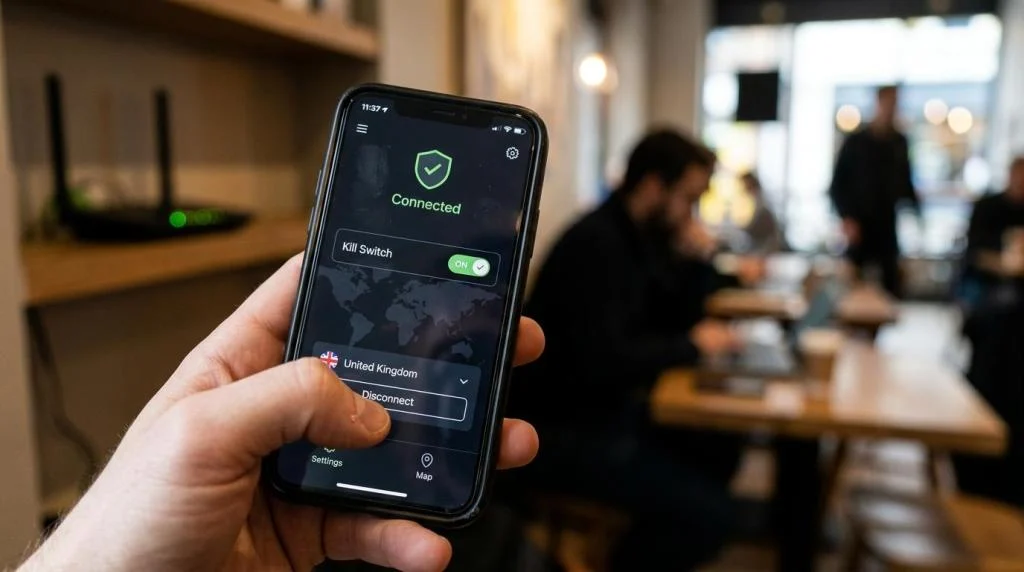
Step 2 is leak behavior. DNS leak protection matters because your browsing requests can escape the tunnel even when the VPN is connected. A kill switch matters because it blocks traffic if the tunnel drops. Without it, a brief disconnect can expose your real IP during calls, downloads, or streaming sessions.
Step 3 is failure testing. Connect the VPN, load a few sites, then manually interrupt the connection or switch networks. If traffic continues outside the tunnel, the kill switch is weak or disabled. Pro tip: many apps ship with the kill switch off by default, so compare defaults, not just features on paper.
A related misconception is that encryption solves every problem. It protects data in transit, but it does not guarantee trustworthy logging practices, safe websites, or account hygiene.
How should you compare server networks, device limits, and app support?
Use your household and travel pattern as the baseline. Raw server count matters less than location quality, device fit, and app stability.
A network with 3,000+ servers sounds strong, but server count alone does not tell you whether the locations you need are covered or whether those servers are optimized for your use case. Travelers may care about nearby exit nodes in several countries. Remote workers may care more about reliable apps on Windows, macOS, iOS, and Android. Families usually care about simultaneous device limits.
This is where concrete specs help. A plan that supports 5 devices may be enough for one person with a phone and laptop. A household with phones, tablets, TVs, and computers often needs closer to 10. Support availability matters too. If a VPN is part of your routine, 24/7 customer support can be more valuable than a small price difference.
“SaviourVPN lists 3,000+ servers in 30+ countries, giving buyers a concrete benchmark for comparing location coverage and network scale.”
Pro tip: compare the weakest app, not the best one. Many providers have a polished mobile app and a less stable desktop client, or the reverse. A provider is only as usable as the platform you depend on most.
How do you test a VPN on public Wi-Fi and home Wi-Fi step by step?
Do three checks: secure the local network, verify site encryption, then confirm the VPN behaves as expected.
Step 1 is the network itself. On home Wi-Fi, NIST recommends checking for WPA2 or WPA3 and using a strong password. On public Wi-Fi, do not assume the hotspot name is genuine. Fake access points still exist, and public network names are easy to imitate.
Step 2 is the website session. The FTC says public Wi-Fi is generally safer today because most sites use encryption, but you still need to look for HTTPS and the lock icon. That said, the FTC also warns that a lock icon alone does not prove a site is legitimate. Credential harvesting pages can still look convincing.
Step 3 is layered protection. Use the VPN, keep software updated, and turn on two-factor authentication where available. A VPN is one layer. It does not replace safe browsing, password hygiene, or patching. Common misconception: public Wi-Fi is always the main threat. In practice, phishing, fake sites, and reused passwords can do more damage than the network itself.
Is a free VPN or a paid VPN the better choice?
Paid VPNs are usually safer for most people because the business model is clearer. The FTC has warned that some free VPN apps rely on ads or data sharing.
The trade-off is simple. Free services lower cost upfront, but they may make money through advertising, analytics, or broad data practices. Paid services ask you to spend money, but that can reduce the pressure to monetize traffic. It does not guarantee good behavior, though. You still need to read the privacy policy and compare disclosures.
If your risk tolerance is low, or if you plan to use a VPN for work travel, banking, P2P, or regular streaming, a paid service is usually the stronger choice. If you only need occasional use, a free option might be acceptable if the provider has transparent limitations and credible privacy terms. The misconception is that “free” and “private” naturally fit together. Often they conflict.
Which VPN app permissions and data-sharing practices should raise concern?
Unnecessary permissions are a warning sign. The FTC has noted that VPN apps can sit in a privileged position because they route sensitive traffic.
A mobile VPN app may need network-related permissions, but it should not ask for access that seems unrelated to tunneling, account management, or support. Location, contacts, extensive device inventory, or persistent analytics identifiers deserve extra scrutiny unless the provider explains a valid reason. The more data the app can gather, the more trust you are being asked to place in it.
Look closely at these signals after reading the policy and the app store listing:
- Third-party SDKs: ad tech, trackers, or vague analytics tools
- Permission mismatch: app requests that do not fit VPN functionality
- Data retention: broad wording about diagnostics or service improvement
- Sharing clauses: disclosures involving affiliates, marketers, or unnamed partners
If a provider says it protects privacy while also reserving room for extensive third-party sharing, the comparison is over. Move on.
When do streaming, gaming, and P2P features actually matter?
They matter when the VPN is part of a real workflow, not just an occasional privacy tool. Streaming servers, low-latency routing, and P2P support are functional differences, not fluff.
For streaming, the key question is server specialization and consistency. A large network helps, but optimized servers can matter more than headline count. For gaming, latency and route stability matter more than maximum download speed. For P2P, explicit support is important because some providers restrict torrenting, block ports, or apply tighter filters on certain locations.
Use-case matching keeps you from paying for features you will never use. If you travel often, broad location coverage and fast mobile apps matter. If you work remotely, protocol stability and a reliable kill switch matter more. If you share one plan across a household, simultaneous device limits may decide the purchase faster than any benchmark chart. The best VPN comparison is the one that turns product claims into a fit test for your own network, devices, and risk level.