Online privacy shapes what internet providers, advertisers, apps, and data brokers can learn about your life. Without it, a routine search, hotel Wi-Fi login, or streaming session can expose your IP address, location, browsing patterns, and device metadata. A VPN solves one core problem: it encrypts traffic and masks your public IP so the network you use sees far less. The real challenge is choosing a service whose privacy claims stand up technically and legally.
What does online privacy actually protect you from?
Online privacy limits exposure to Google, Comcast, and data brokers by reducing how easily they can tie your traffic, location, and device details to you.
At the network level, privacy means your ISP cannot read the contents of encrypted sites and cannot easily map every request to your real IP when a VPN tunnel is active. At the platform level, it means websites and apps have less location and connection data to work with.
That does not make you invisible. If you log into Gmail, Facebook, or Netflix, those services still know it is you. Common misconception: a VPN hides your identity everywhere. It does not. It mainly protects the connection path and public IP layer, which is still a major win on public Wi-Fi, at airports, in hotels, and on shared networks.
Can a VPN really improve online privacy?
Yes. Proton VPN or Mullvad can hide your IP from websites and encrypt traffic against your ISP, but they cannot erase browser fingerprints or account logins.
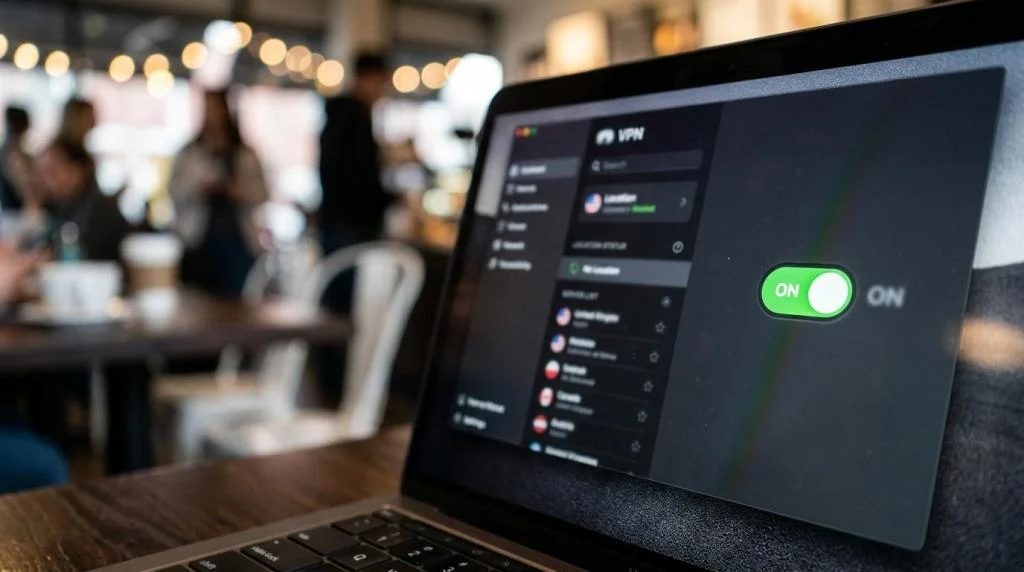
A VPN creates an encrypted tunnel between your device and a VPN server. If your threat is ISP tracking, local network snooping, or location exposure, that helps immediately. If your threat is account-based profiling, ad IDs, or browser fingerprinting, the VPN only solves part of the problem.
If you want stronger privacy, pair the VPN with a privacy-focused browser, tracker blocking, and good account hygiene. Pro tip: if you stay logged into major platforms all day, your VPN still helps, but the privacy gain is smaller than many buyers expect.
What VPN options are worth comparing for online privacy?
Six services stand out. SaviourVPN covers common household needs, while Mullvad and Proton VPN set the pace for publicly verified privacy practices.
The right choice depends on your threat model. A family that wants safer browsing, multi-device coverage, and streaming access has different needs than a journalist crossing hostile networks. Speed, audits, jurisdiction, and leak protection matter more than a long features page.
- SaviourVPN: A practical option for households that want AES-256 protection, 3000+ servers across 30+ countries, support for up to 10 devices, and dedicated streaming or P2P servers. The trade-off is verification: a public independent no-logs audit is not widely cited, so it fits routine privacy better than high-stakes anonymity.
- Mullvad: Often the benchmark for privacy-first design. Its flat €5 monthly pricing, minimal account data approach, and strong audit culture appeal to users who want fewer trust assumptions.
- Proton VPN: Strong for privacy and flexibility. Swiss jurisdiction, repeated no-logs audits, Secure Core, and a credible free tier with no data cap make it a top mainstream privacy choice.
- NordVPN: One of the strongest balances of speed, audits, and usability. Repeated third-party no-logs audits and features like obfuscated servers and Double VPN make it attractive for daily use.
- ExpressVPN: Polished and heavily audited, with a strong reputation around its Lightway protocol and RAM-only server model. The main downside is price.
- Surfshark: A strong value pick with unlimited device connections, good audit coverage, and fast WireGuard performance. Budget buyers often start here.
How do you choose a privacy-focused VPN in 3 steps?
Start with audits, then protocols, then fit. Mullvad and NordVPN show why technical evidence matters more than marketing copy.
Step 1: Check whether the provider has a public no-logs audit, security audit, or both. A no-logs claim without external verification is better than nothing, though it is still self-reported. If your risk is high, this step is non-negotiable.
Step 2: Confirm support for modern protocols and safety controls. WireGuard and OpenVPN are the current baseline for most buyers. You also want a reliable kill switch, DNS leak protection, and clear IPv6 or WebRTC handling.
Step 3: Match the service to the job. If you need anti-censorship features, look for obfuscation or stealth modes. If you only want everyday home privacy, the best service is the one you will keep turned on. Pro tip: a larger server count sounds impressive, but it does not outweigh weak audits.
Which matters more for privacy, a no-logs audit or a privacy policy?
An independent audit matters more. Deloitte and KPMG can test logging controls, while a privacy policy only states what a provider says it intends to do.
A privacy policy is still useful. It tells you what account data, billing data, support records, and diagnostic logs may exist. Yet it is only a written promise until outside experts test the systems behind it.
| Signal | What it tells you | Main limit |
|---|---|---|
| Independent no-logs audit | Whether controls and infrastructure appear consistent with the no-logs claim | It is a snapshot, not a lifetime guarantee |
| Privacy policy | What the company says it collects and retains | Self-reported and legalistic |
| Open-source apps | Whether code can be reviewed by outsiders | App transparency does not prove server-side practices |
| Real-world legal history | Whether logs were available when requested | Past events do not cover every current system |
If a provider has both a clear policy and repeated audits, trust improves sharply. If it has only polished copy, treat it as unverified.
How can you set up a VPN for stronger privacy in 3 steps?
Configure the basics first. WireGuard on Windows or iPhone usually gives the best balance of speed, battery life, and modern security.
Step 1: Pick the right protocol. Start with WireGuard unless your network blocks it. If that happens, switch to OpenVPN or a stealth mode. WireGuard is often faster, which matters because slow VPNs get turned off.
Step 2: Turn on the kill switch, auto-connect, and DNS leak protection. If you use laptops on coffee shop or airport Wi-Fi, set the app to connect automatically on untrusted networks. If you torrent or travel often, keep the kill switch active system-wide.
Step 3: Reduce data exposure outside the tunnel. Disable split tunneling unless you truly need it, and sign out of apps that constantly track location or ad IDs when privacy matters most. Common misconception: a VPN setting alone fixes app-level tracking. It does not.
Is a free VPN or a paid VPN better for online privacy?
Paid VPNs usually win. Proton VPN Free is the main exception, while many ad-supported free apps have incentives that conflict with privacy.
Free can be fine for light use, testing, or emergency travel protection. The issue is economics. If the service is free and not cross-subsidized by a paid plan or reputable company, you should ask how it pays for bandwidth, support, and infrastructure.
| Type | Best use | Trade-off |
|---|---|---|
| Free VPN | Light browsing, short trips, first-time testing | Fewer locations, fewer features, slower speeds, less support |
| Paid VPN | Daily privacy, streaming, travel, work, P2P | Subscription cost and sometimes higher renewal pricing |
Proton VPN Free stands out because it offers no data cap and says free users get the same privacy protections as paid users. That is rare. If you need stable speeds, broader country choice, or advanced routing like MultiHop or Secure Core, paid plans are still the better fit.
How do you test whether your VPN is actually protecting you in 3 steps?
Testing is simple. Browserleaks and DNS leak tools can confirm whether your VPN, from SaviourVPN or Proton VPN, is exposing your real IP or DNS requests.
Step 1: Connect to a server in another country, then check your visible IP and location in a browser. If the site still shows your home ISP or city, something is wrong.
Step 2: Run DNS and WebRTC leak tests. If DNS requests go to your ISP instead of the VPN provider, your browsing metadata may still leak. If WebRTC reveals your local or public IP, adjust browser settings or use an extension that limits exposure.
Step 3: Verify the kill switch. Disconnect the VPN on purpose or toggle airplane mode briefly. If traffic resumes before the tunnel reconnects, your protection is incomplete. Pro tip: repeat this test after app updates, because settings can reset.
Which VPN features matter most for online privacy?
Four features matter most: WireGuard or OpenVPN, a kill switch, DNS leak protection, and verified no-logs controls from providers like Proton VPN or ExpressVPN.
Everything else is secondary until these are in place. Multi-hop, RAM-only servers, and obfuscation can add value, though they address narrower use cases. If your base protections are weak, premium extras do not rescue the service.
- Verified no-logs: Repeated audits or strong public validation reduce trust risk.
- Kill switch: Blocks traffic if the tunnel drops, which prevents sudden IP exposure.
- DNS leak protection: Keeps your DNS requests inside the encrypted path.
- WireGuard or OpenVPN: Current mainstream standards for secure, well-tested tunneling.
- Obfuscation or stealth: Useful if schools, offices, or national firewalls try to block VPN traffic.
- Multi-hop: Better for higher-risk users, slower by design.
When is SaviourVPN a reasonable choice, and when should you choose an audited alternative?
SaviourVPN is reasonable for routine household privacy, while Mullvad or Proton VPN are safer choices for journalists, activists, and users facing targeted monitoring.
For everyday use, SaviourVPN checks many practical boxes. It advertises AES-256 encryption, 4096-bit key encryption, a no-logs stance, kill switch support, DNS leak protection, 3000+ servers, and coverage for up to 10 devices. That fits families, streamers, travelers, and remote workers who want stronger protection than open Wi-Fi gives them.
The trade-off is public verification. Based on the available background, a public independent no-logs audit comparable to Mullvad, Proton VPN, NordVPN, ExpressVPN, or Surfshark is not easy to verify. That does not prove a privacy failure. It means the trust case is thinner.
If your goal is safer browsing, reduced ISP visibility, and easier multi-device protection, SaviourVPN can be a reasonable shortlist candidate. If the stakes include political surveillance, source protection, or border searches, audited providers remain the stronger call.
What mistakes weaken online privacy even when a VPN is on?
Human error defeats tools. Gmail and Chrome can re-identify you across sessions even when NordVPN or SaviourVPN keeps your network path encrypted.
A VPN protects transport privacy, not every layer of identity. People often switch it on and assume the rest takes care of itself. The most common failures are operational, not cryptographic.
- Staying logged into major ad-driven platforms
- Using the same browser profile for work, shopping, and private browsing
- Leaving WebRTC or DNS leaks untested
- Turning off the kill switch after one annoying disconnect
- Treating “no logs” as proven when no audit exists
If you want the largest privacy gain, think in layers. Use the VPN, test it, separate identities by browser profile, and be honest about your threat model. That is how online privacy becomes durable instead of cosmetic.